Your first scene
Twenty minutes, a notebook, and you will have played. The step-by-step guide to Ask the Sky, with nothing read beforehand.
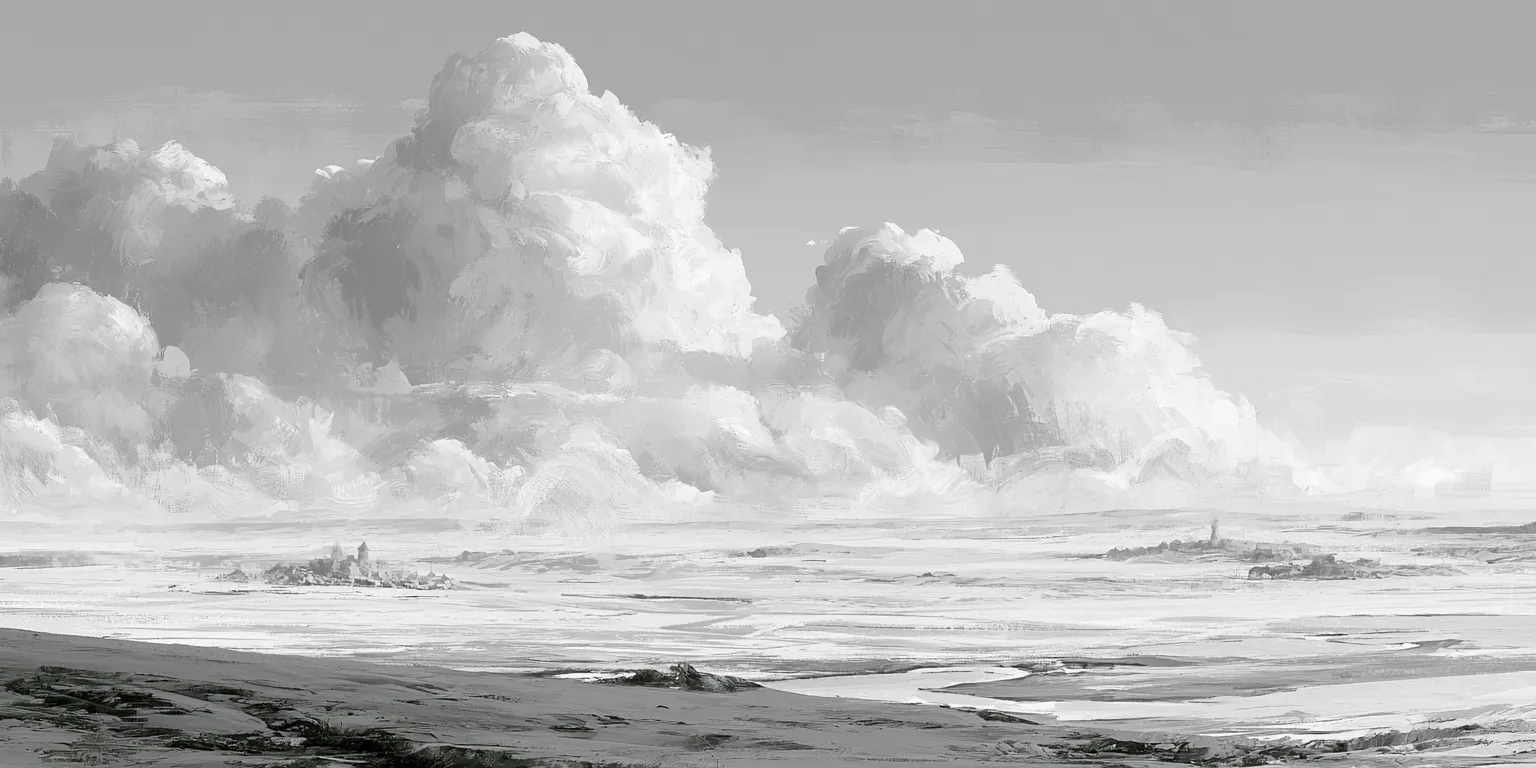
You have read nothing of Ask the Sky, and you want to know what it feels like. This page has you play one Scenethe unit of play: you open it, you play it, you close it.part 3, a single one, in about twenty minutes. At the end you will have written something — and you will know whether this game is for you, which no presentation can tell you.
The rules arrive one at a time, at the moment you need them.
Here is what it looks like
Section titled “Here is what it looks like”A scene played, taken from the book. Three cards to open, one kept; a place, an hour; two questions to the Cointhe oracle of closed questions: heads the first pole, tails the second. It never resolves an action.part 1. Nothing tips over — it is an ordinary evening, and that is where one begins.
An opening played — the departure
Section titled “An opening played — the departure”I open — three cards. The Two of Cups (a bond one leaves), the Knight of Wands (an ardor, a headlong departure), and the Six of Swords (a melancholy passage toward an elsewhere, leaving for a better one is not sure of reaching). All three speak of departure, each in its own way — but it is the Six of Swords that touches me. I keep it; I let the other two go. The whole scene will be tinted by it.
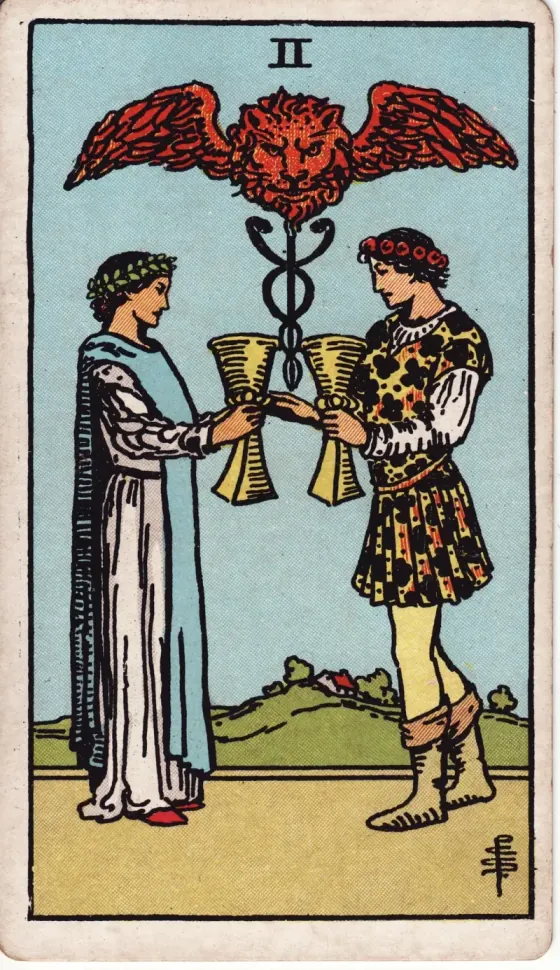 the bond
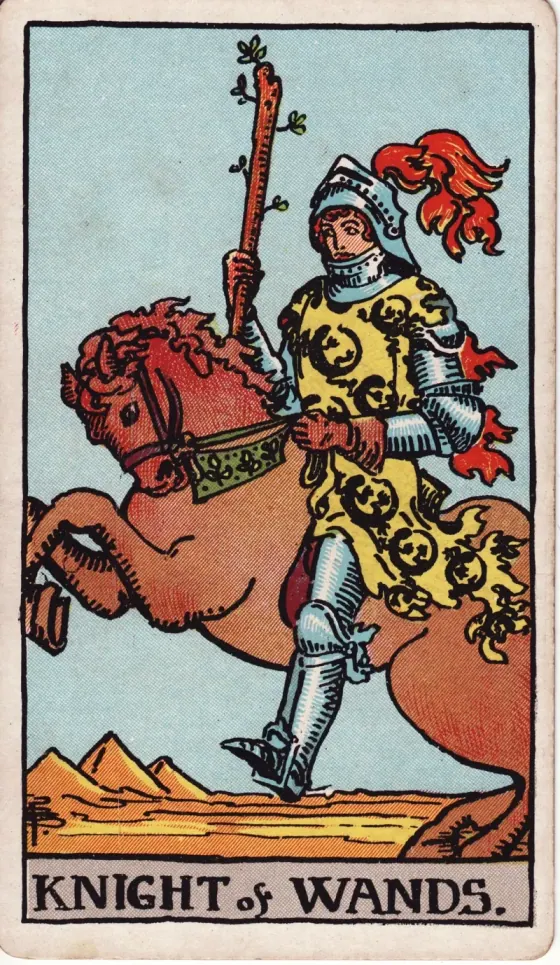 the ardor
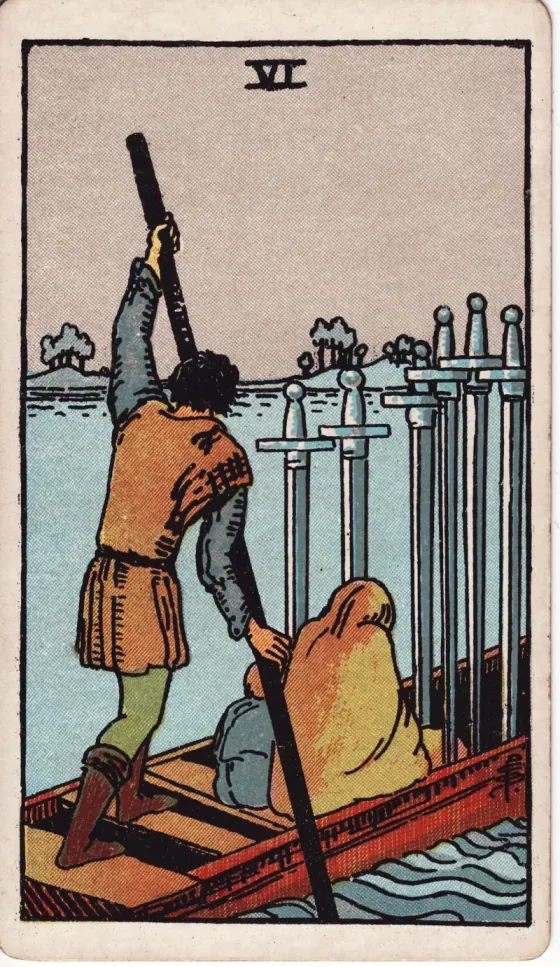 kept
kept
I set down an hour, a season:
An evening at dusk, the end of a hot summer. The crickets are still singing, here and there.
Then a place:
I am in Nandésis, the world-city of the Free Lands. A boat is waiting for me at Mélaïde.
Do I have a ferryman with me? — coin: no.
The boat waits for me, alone. The weak eddies make its old wood creak.
Something is rising, and here I want matter: I draw a card, without asking anything, for what I am leaving behind. The Ten of Pentacles — a house, an inheritance, a whole foundation. I gave too much to that house; I lost myself in it. It has the taste of a betrayal.
Once in the boat, I cast off and let the weak current carry me. Rocks come out of the water, misshapen in the dusk. But the moon is already shining, ready to guide me across.
Is anyone waiting for me, at the other end? — coin: yes. I invent a name:
I hope Morgan is ready to receive me.
There. Twenty lines, two flips, four cards. You are going to do exactly that — and what stands in the quoted blocks will be yours.
1 · What you are playing
Section titled “1 · What you are playing”You are alone with a notebook. You tell, in the first person, what someone does, and you write down what happens. You do not decide everything: when a thing is uncertain, you hold it out to chance — a coin, a card — and you live with the answer.
Chance is not what invents. You are. The draw only chooses between what you have held out; what a card means tonight is for you to decide, and that is where the game is.
No sheet, no numbers, no catalogue of actions. Nothing grows in power. You cannot win this game — you can only write something you would not have written on your own.
2 · What you need
Section titled “2 · What you need”A notebook and something to write with. If you have one at hand, take it: this game is written by hand, and the slowness of the wrist is part of the pleasure. Otherwise, write here — the boxes below keep what you type, and you will be able to take it all back at the end.
You also need a tarot Decka single pack of 78 cards, majors and minors mixed, reshuffled at the opening of every scene.part 2 of 78 cards and a coin. You have neither? For the length of this scene, I lend you both: the buttons on this page draw and flip for you.
But buy a real deck. A Rider-Waite off the shelf does the job very well, and it changes everything: the pack you shuffle, the card you turn over, the time you take looking at it before you understand — that time is what brings the ideas. A button does not give it to you.
3 · Who are you?
Section titled “3 · Who are you?”One sentence is enough: a name, what you do, and one thing you want. The rest will be discovered in play, as in life.
Nothing coming? Take the book's default world — the Free Lands, a fallen empire, vessels that fly, a mother city named Nandésis — and put yourself inside it: a docker on the high wharves, a copyist who sells false charts of the sky, a kid off the rooftops. Or play at home, in your own town, today. The engine carries any world at all.
A name, what you do, one thing you want. One sentence, no more.
4 · Where are you?
Section titled “4 · Where are you?”A scene needs a place. Set down a place and an hour in one sentence — where are you, at what moment?
If nothing comes, do not look for it: go on to the next step, draw first, and the place will come from the card.
Where, and when. One sentence. Or nothing at all, if the card is to say it.
5 · The opening — three cards, one kept
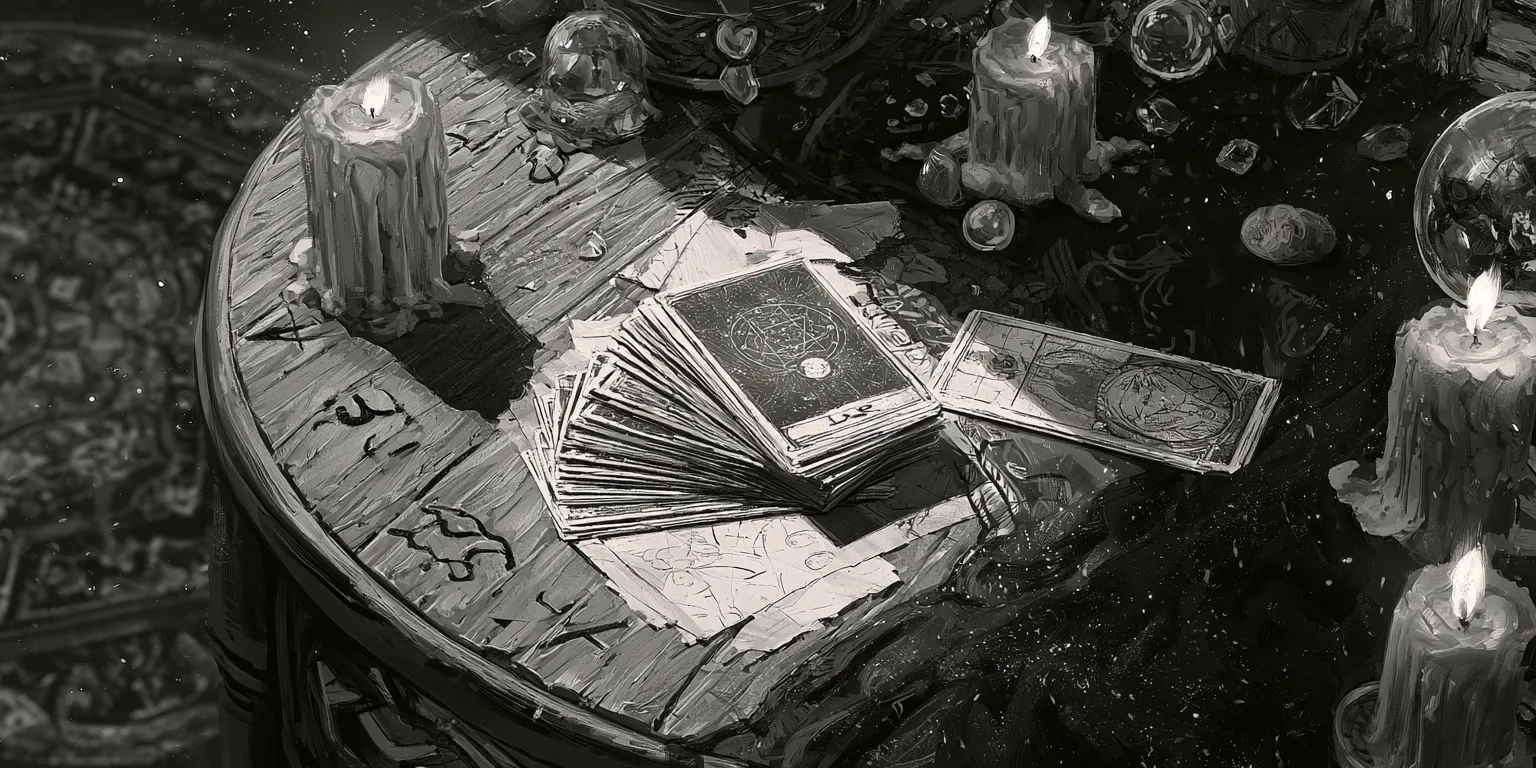
Section titled “5 · The opening — three cards, one kept”This is the gesture by which every scene begins (part 3). Three cards. You lay them down before you, you keep one, and you give up the other two: they go for good.
Keep the one that surprises you — the one whose destination you cannot see yet — never the one that reassures. And do not go back on the two that leave. It is the only draw in the game where choosing costs you, and it is what makes your entrance real.
One more thing, for tonight only. If a Major Arcanumone of the twenty-two named cards, from The Fool to The World. It does not answer: it names, and it weighs.parts 2, 4, 6 slips in among the three — a named card, The Tower, The Hermit, The Moon —, leave it and keep a Minor Arcanumone of the fifty-six cards of the four suits, from Ace to King: the matter of the everyday.parts 2, 4. Keeping a major opens another regime of scene, longer and dearer, which the book teaches in its own time (part 6). It will come back.
6 · Make the card speak
Section titled “6 · Make the card speak”Your card is not an answer: it is matter. Look at it without hurrying, and ask it what it brings here, into the place you have set down — or, if you had none, what place can carry this.
It will rarely give you a ready-made image. Rather a color, a mood, someone. This is not a lack: what the card gives is not a place, it is a condition the place will have to meet. A bitterness? Look for where that air is breathed. A face? Ask where one meets that person, at that hour.
And do not draw a second time because the first did not give enough. A poor card is a constraint, not a failed draw.
Two or three sentences, first person, present tense. What you see, what you feel.
7 · The coin — letting the world decide
Section titled “7 · The coin — letting the world decide”There you are, somewhere. Now a closed question (part 1), one whose answer you do not know: am I alone? is someone waiting for me? is the door open?
One rule, and it counts: propose two Poles (the two)the two worlds you set down yourself before tossing the coin: never a yes and an empty space.part 1, never a yes and a void. Both answers have to give you something to play. "The door is open" against "the door is shut" is worth nothing; "the door is open, and someone has already gone in" against "the door is closed, and the lock is new" leaves you work on either side.
You are the one who makes the two worlds. The coin only says which one happens.
One sentence. What the coin has just made true, written as you live it.
8 · Carry on, then stop
Section titled “8 · Carry on, then stop”You have everything you need. A closed question to the coin, a card when the question is open, and a sentence after every answer. Do not look for a plot. Let the place fill up until something intrigues you — then follow it.
Two or three exchanges are enough for a first evening. You will know when to stop: it is the moment you want to know what comes next.
Carry on here. Stop on a question you have not answered — that is the one that will open the next time.
And now
Section titled “And now”What you have just done is a scene — the unit of play in Ask the Sky (part 3). The book adds one notch per part: acting on the world when something resists (part 5), Fatewhat comes in when you keep a major at the opening, and by no other door: the moment stops being ordinary. What it closes, only it can open.part 6 when you keep that major you left tonight (part 6), the world moving on behind your back while you look elsewhere (part 9).
None of it is learned in advance. It is learned by playing, one part at a time, exactly as you have just done.
And buy that tarot deck.