The world around
raising those who live in it
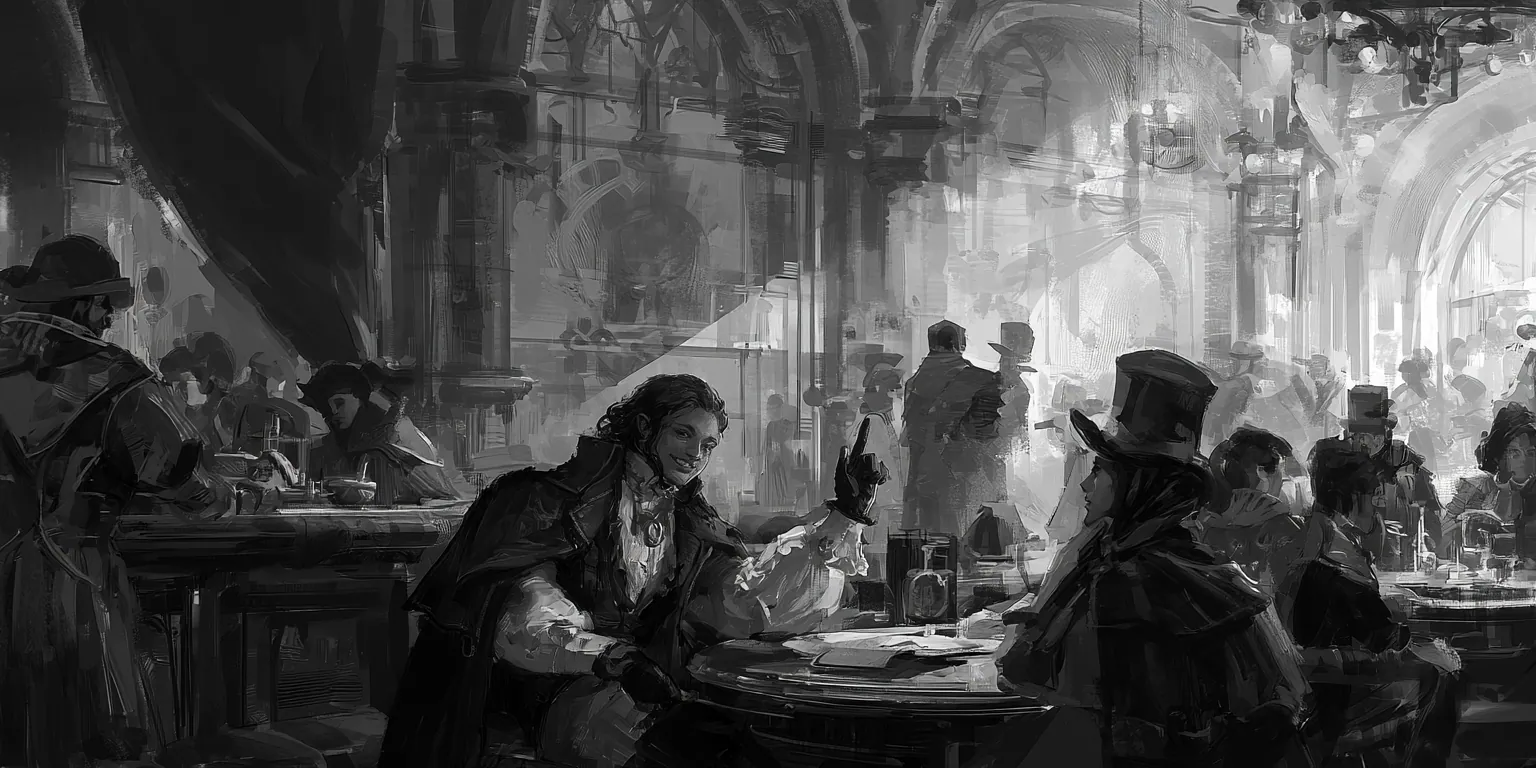
I walk into this overfull café. The noise irritates me at once: the mugs clinking, the loud talk, the music underneath… Then, looking more closely, I catch sight of Morno at the table on the right. I am afraid he will see me, I turn back toward the door. Too late: he waves both arms and calls out my name at the top of his voice.
Your character is not the center of the world — only the one through whom you look at it. The world turns without him: actors want, Threadthe tension running from one scene to the next: what stays open when a scene closes, and calls up the following one.part 8 pull taut, questions ripen in the shade.
Here is who lives in it: how you Populate · widen · hook · probethe four families of question: who is there and how he is (coin) · what exists just beyond the frame (card) · what is off (card) · staying with the answer that has already fallen. (parts 1 and 2) it, who deserves to be kept, what you write about those ones.
◆ Populating the world — backdrop or actor
Section titled “◆ Populating the world — backdrop or actor”Not everything you come across goes on the Standing pagethe page that keeps what is pending: living actors, waits, stakes, desires under way, doors closed by fate. There is only one, and it replaces the previous one.part 8. The innkeeper, the guard you dodge, the alley crossed once: Backdrop: pure color, forgettable. What will come back and weigh over time: an actor. A single test decides: what does it want? If you can lend it a Desirewhat your character wants. No mechanism, no count: it orients what you play.part 11, it is an actor: enter it on the standing page. Otherwise, it is Backdrop.
An actor is a presence that wants, not an extra, but someone straining toward a goal.
◆ A Backdrop that rises, played
Section titled “◆ A Backdrop that rises, played”For months Regiord has frequented the starport bar: three words at the counter, never more, before boarding a friend’s starship. The barman? Backdrop. A face behind glasses. Today, the friend does not come.
I wait. An hour, two. Vael’s freighter shows on no screen in the hall. The barman has served me again without a word, as always — I have never really looked at him. Nothing to draw, nothing to ask: I write what comes.
He wipes a glass, at length, then says without raising his eyes: “You are waiting for your friend. The freighter man.” — “Yes. He was to take me along.” He puts the glass away. “Left this morning, early.” A pause. “If you wait until the end of my shift — I run the same route. My starship is small, but she flies. I will drop you off.”
I read my sentence back, and an idea comes to me about this barman: it comes from no draw, it comes from what I have just written. And there, I see him. Really. This man is not a wall: he has a route of his own, a starship, a destination — mine, into the bargain. The test falls of its own accord: what does it want? This one wants something. A desire can be lent to him. I anchor him, not for what he is, for what he wants:
Astore (his name, which I will learn later) — calm, entire, the look of someone who has already arrived somewhere — brought us together without my seeing it coming · wants: to carry every voyage through to its end, to close the circles · what is a man that quiet doing behind a counter?
I look at him differently now. The counter, the glasses, the evening shift: a disguise — I do not yet know for what. “I will wait,” I say. He smiles, barely. “I know.”
An actor does not always arrive with a fanfare — sometimes he has been pouring your drinks for months, waiting for you to raise your eyes.
◆ The surroundings — three points of interest
Section titled “◆ The surroundings — three points of interest”Populating one card at a time is usually enough. But there is a broader gesture, for the moments when you want a place to teem all at once: look at the surroundings. Draw three cards, lay them side by side (three living things within arm’s reach), and read them quickly, without dwelling: a figure at the counter, a book forgotten on a table, a door that is never opened. Then choose one, the one that calls you, and play it now.
The other two do not go away. That is the whole difference with the Opening (the)the gesture that begins every scene: three cards, you keep one, you give up the other two. The only draw where choosing costs, and the only door of fate.part 3, where giving up is the price and where the cards set aside disappear for good. Here nothing is lost: the two cards you do not play stay on the table, points of interest asleep. The Scenethe unit of play: you open it, you play it, you close it.part 3 goes on around them, and the day your attention lands on them, they are already there, ready to rise. A backdrop that Waitan open question that nobody else is looking into: it belongs to you, it ripens, it has the right never to close.part 8, not a choice that costs.
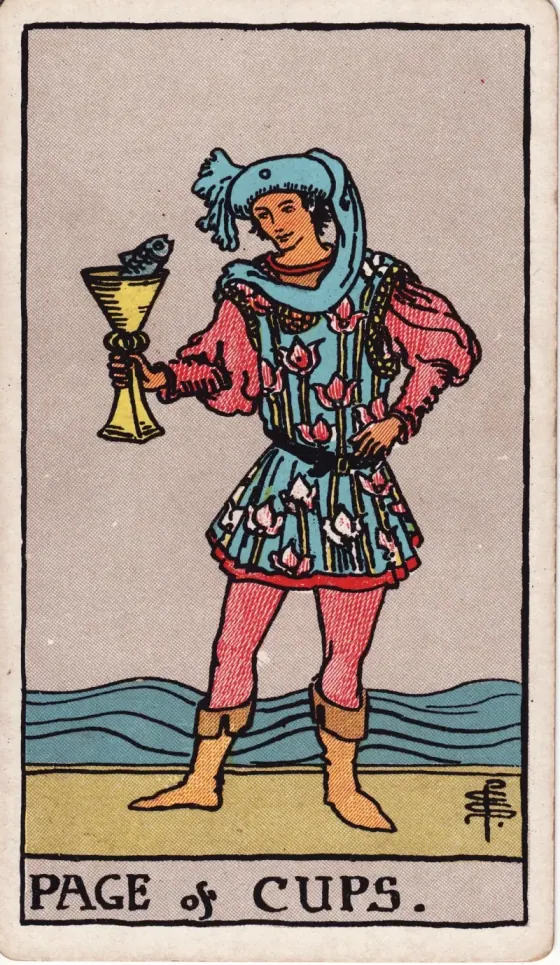 at the counter
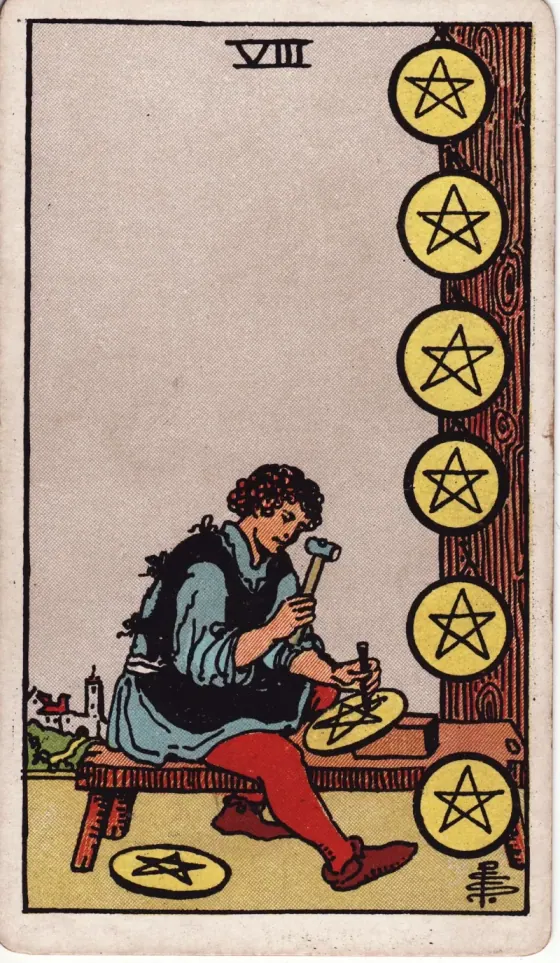 the work left standing
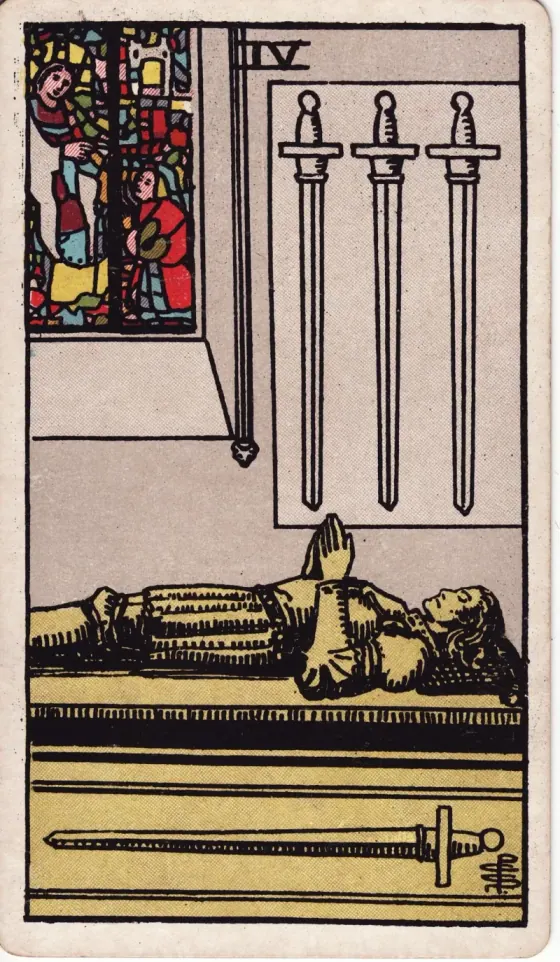 the door at the back
A Major Arcanumone of the twenty-two named cards, from The Fool to The World. It does not answer: it names, and it weighs.parts 2, 4, 6 among the three does not bring Fatewhat comes in when you keep a major at the opening, and by no other door: the moment stops being ordinary. What it closes, only it can open.part 6 in: fate comes in only at the opening. But it marks that point as important: not a passer-by, but someone who will count; not an object, but a charged object; not a door, but a threshold that will weigh. A presence of fate set down in the backdrop, whose reason for being there you will work out later.
◆ The surroundings, under a question
Section titled “◆ The surroundings, under a question”Sometimes a question itches at you during a scene. How do I get out of here? Where do I find enough to last until morning? Which way do I go without being seen? Do not keep it muffled: the surroundings can answer it.
The gesture is the same — three cards, read quickly, one only played — but you are no longer asking the place what it contains: you are asking it what it contains for someone looking for that. Not “how do I escape,” but “what is there here for someone who wants to flee.” The nuance is thin and it counts: put on you, the question admits only answers; put on the place, it lets the place answer something other than what you were hoping for: a guarded way out, a way out that costs, or somebody else trying to flee too.
Where do I find something for this burn, before nightfall? Do not ask the district whether it has a herbalist. It has one or it does not, and there you are deciding on your own. Ask it what it holds for someone looking for plants.
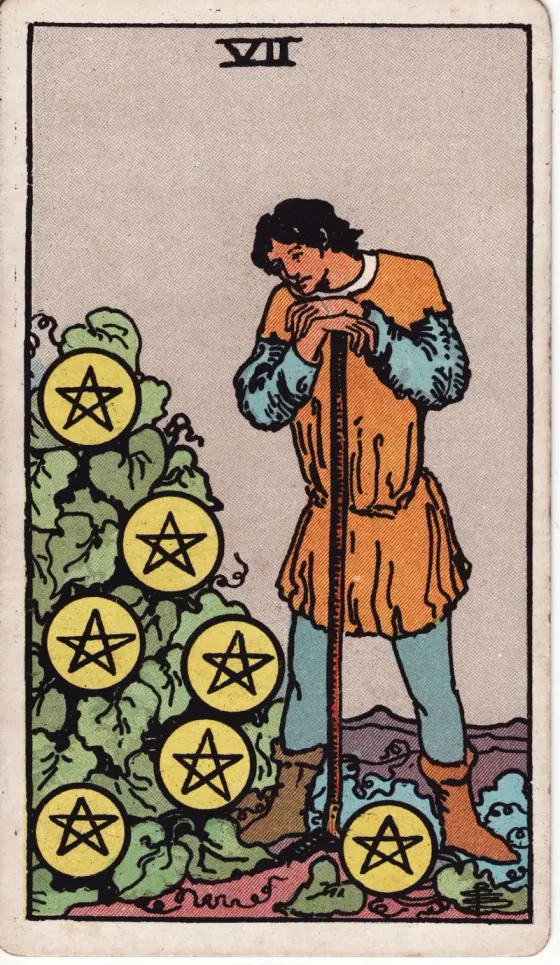 the cultivated yard
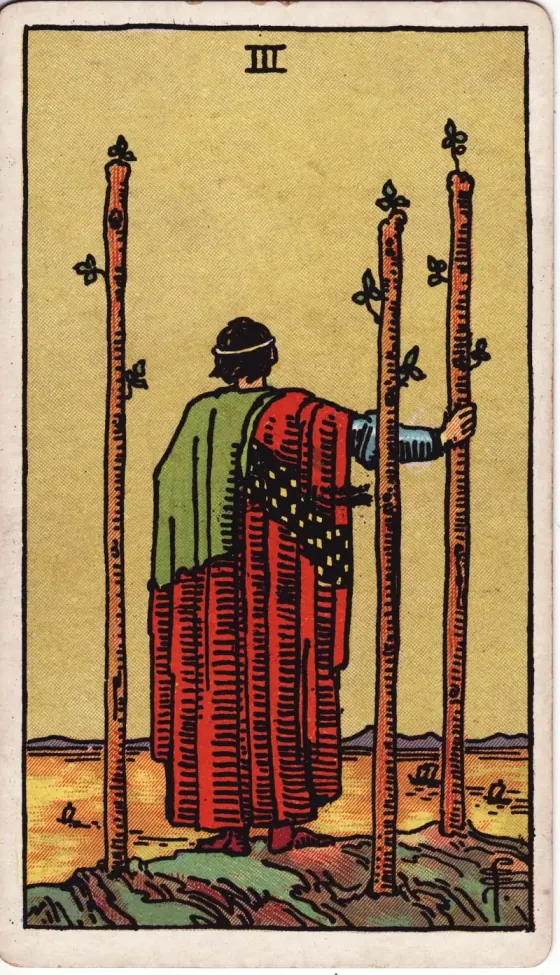 what came in at the port
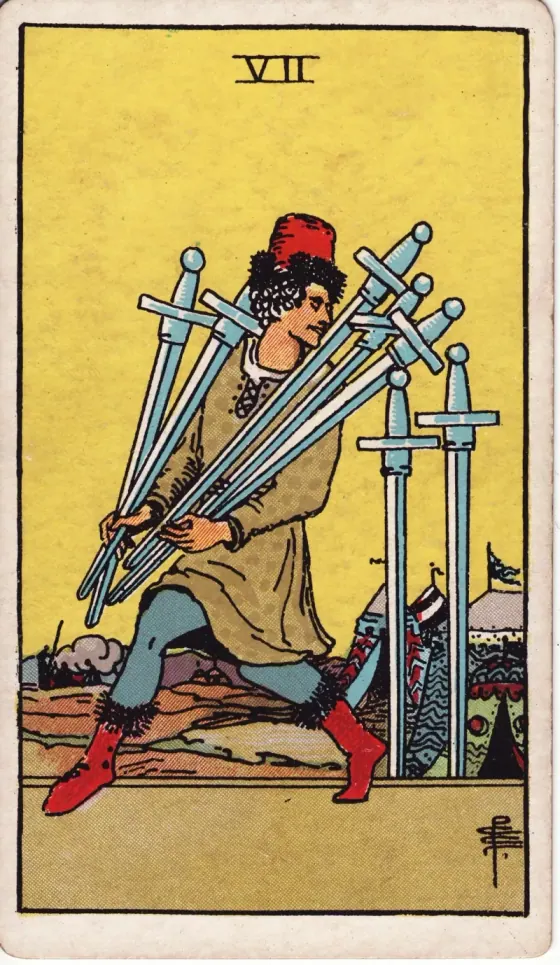 the back room
Three shops, and not one promise in common. The Seven of Pentacles grows things: a yard where they cultivate their own, safe and slow: come back tomorrow. The Three of Wands brings things in: the stall by the port sells what a vessel brought back, dear, and the next one does not arrive tonight. The Seven of Swords asks for no name: that is the one you play, the salve is there before nightfall — and somebody, from now on, knows what you were looking for. The question put to the place did not give back a herbalist, it gave back a price.
Once the question is settled, the two cards you did not play are no longer ways out: that would be two doors open behind a door already crossed. They fall back into ordinary backdrop: points of interest asleep like the others, relieved of the question that had called them up. The alley that was to save you stays an alley.
And if a major falls among the three, it says here that the answer you are looking for will weigh more than you think.
◆ One card for a presence
Section titled “◆ One card for a presence”Two moments call for the same single card, each in its own way. The first is discovering people. The world is peopled, and you do not have to decide alone who lives in it: in a city, a presence goes without saying: draw one card and read who is there, whom you are dealing with. Outside the cities, on an empty road, the meeting is no longer a given; ask the Cointhe oracle of closed questions: heads the first pole, tails the second. It never resolves an action.part 1 first whether anyone crosses your path, then, if someone does, draw the card that sketches him. In every case, a card to give him a temper is worth more than a face invented out of nothing — chance finds people you would not have imagined.
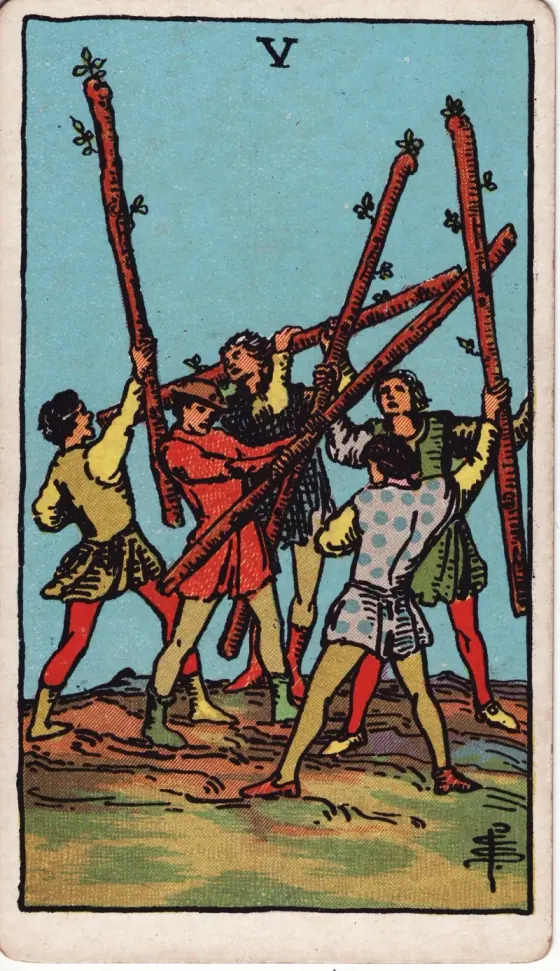
Five of Wands: five staves knocking against one another without any of them winning. This is not a face, it is a temper, and it is better than a face: the one coming in has a quarrel under way. He carries it on him, he will speak of it before anyone asks his name, and he is not looking for trouble — he already has some. So he is not dangerous: he is busy, and that is the way in. Left to myself, I would have made an innkeeper; with that card in hand, I make someone who arrives in the middle of his own story.
The second is seeing someone again. There, no need to rediscover who he is: what has changed is the moment. Draw one card for his state of the day: what is occupying him, a worry he is going through, a thought he is chewing over. The person is the same; the card says only in what disposition you find him, and where to come in.
◆ Actors — a presence that wants
Section titled “◆ Actors — a presence that wants”An actor exists outside the scenes. Note him in one stroke: a name; his push, what he wants, what makes him move; two or three keywords, a way of acting, not a portrait; a bond, what you are to each other, now (see below); an open question, what you still do not know about him.
The push is the heart of it. It is not a coat of arms, it is a desire: read it as a wanting. Loudia does not “embody” authority, she wants to take back, to hold, to let nothing go. That desire colors every scene she appears in, and above all, it makes her act alone in a World scenea declared scene in which your character is not present: the world advances behind his back. After three scenes played at his side the floor is the world’s; never two in a row, and fate does not come into it. It moves forward what pends, or it merely lives — a breather.part 9, toward her goal, without waiting for you. That is where the world writes the adventure in your place.
Loudia — strategist, authority, calculation — sent me on a mission then lost sight of me — ally, or manipulator? · push: to take back, to let nothing go.
An actor you never play does not exist: better three living actors than ten forgotten ones. Anchor sparingly, and let their desires compost among themselves. And the one you stop revisiting fades of his own accord: a departure, a death, a silence. Come back to him only if you feel like it.
◆ An actor’s portrait
Section titled “◆ An actor’s portrait”An actor who counts ends up overflowing one line. Make him a portrait.
The standing page keeps the overview: who exists, in one line. The portrait keeps the life: what he wants, what you do not know about him, what has happened between you. It is not written at one go, and it is not corrected: the day the man has changed, you write another one, further on, without touching the first. The last portrait holds for what it says; what it does not say again stays true from the previous one. Read them one after the other, and you have someone’s trajectory.
Make one for whoever weighs — not one more.
◆ The bond — what you are to each other
Section titled “◆ The bond — what you are to each other”In that portrait, beneath the push, a line of its own: the bond. One sentence, each time something has moved it, with its anchor: since what.
And one rule, one only: you never erase. The new bond is written under the old. Cross out the old, and all you have is a state; stack them, and you have a history. Everything else moves: a desire dies out, what fate has broken remakes itself other; a bond stays, and is read back.
→ Those people leave behind them things begun and questions unanswered: part 8.