Fate
wagering, and living with it
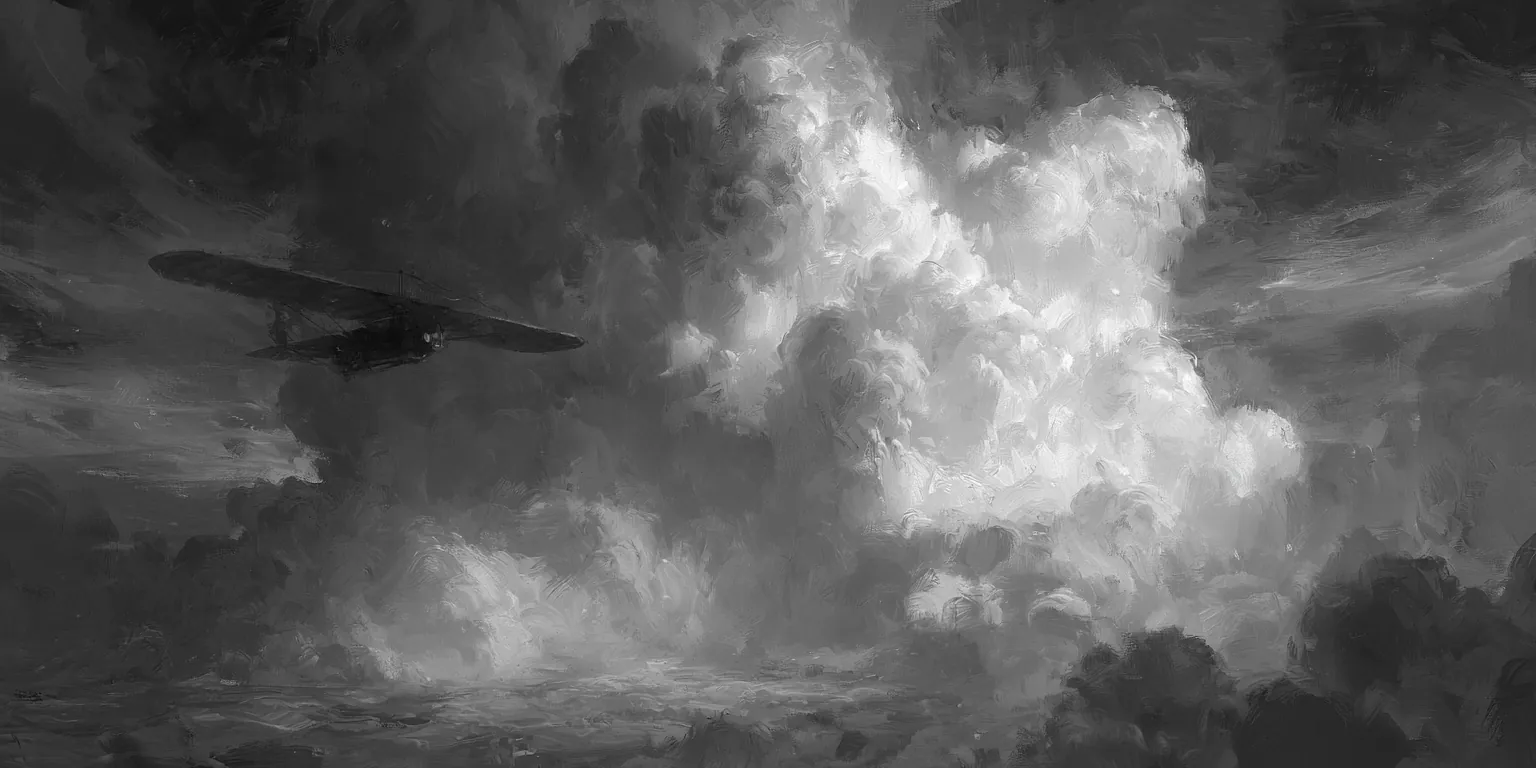
“Nera, be careful, you are crossing a band of turbulence…”
The radio crackles, then goes quiet: contact with Kamalia is lost.
And all at once, the calm. Too calm. My skyglider is struggling to hold — not a breath left to carry it.
I know this moment. It is the one that comes before the storm.
I straighten up, I start the emergency controls: I fold the wings back, I ready the stern sail. The first squalls are already arriving, the sky is turning black. I can feel it. I am going to have to fight to live.
There comes a moment when feeling your way is no longer enough, when a card of fate tempts you, and you take it. The Major Arcanum chosen brings fate in; and fate is crossed in two ways: by facing it, or by enduring it. Not always a fight: sometimes a Bondwhat an actor seems to expect of you, written on the standing page and never crossed out: you stack, you do not correct.part 7 to hold, a threshold to cross, a thing to be earned. It is there, and only there, that your character can truly change.
◆ Reading the opening — how many doors are left
Section titled “◆ Reading the opening — how many doors are left”At the Opening (the)the gesture that begins every scene: three cards, you keep one, you give up the other two. The only draw where choosing costs, and the only door of fate.part 3, before you even read your three cards, count the majors. This is not a rule, it is a reflex: at a glance, you will know how many exits you have left.
- None. The Everyday (the)what plays out when you have kept a minor at the opening: fate has not come in, nothing is put at stake.part 4 has all the room: nobody is asking anything of you, the Scenethe unit of play: you open it, you play it, you close it.part 3 is yours.
- One. Fate is winking at you: tonight, you could play something large. You have two cards left to go on your way.
- Two. It sits down at your Table (the)the surface in front of you: the cards drawn stay in view on it for the length of the scene.parts 2, 7: something is happening, and you have only to reach out. One card, from now on, not to see it.
- Three. No exit left: the card you keep will be a major, and all that remains is to choose which.
The world is no longer asking you whether; it is asking what you are going to do with it.
◆ What fate changes
Section titled “◆ What fate changes”Not the ceiling: a Ten of Swords outside fate will ruin a night for you just as well as a major. What it changes is the floor, and what remains. Under fate, nothing starts small: the everyday climbs if it wants to, fate starts large already. And what happens stays — you carry off what you wanted, or you lose for good what you had put in.
And something opens that nothing else opens. Outside fate, the world answers in the terms you set for it; under fate, it can answer with the outcome that did not exist. That is why one takes a major: not because it serves something, but because the scene that follows will resemble no other.
Nothing ever obliges you, and that is precisely what makes it tempting. But taking the card commits you: you do not withdraw along the way. You declare what you are risking, and you go to the end. Look at it for a moment; if nothing comes to you to put opposite it (not a bond, not an object, not a place), let it go: fate is not played empty-handed.
◆ Reading the major — a desire against a resistance
Section titled “◆ Reading the major — a desire against a resistance”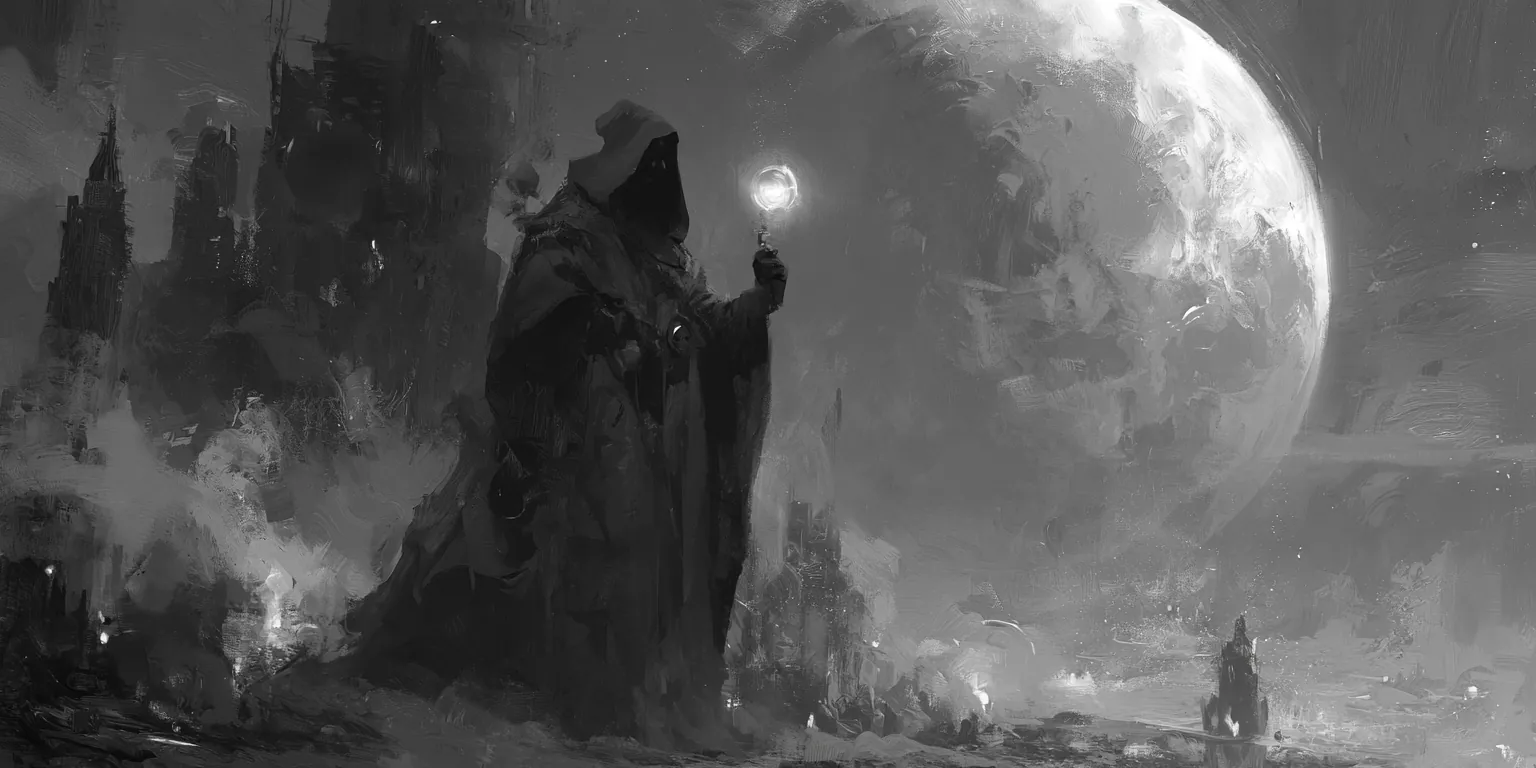
The major you take is no harder to read than any other — it is hard to strike. The card gives you the Desirewhat your character wants. No mechanism, no count: it orients what you play.part 11, yours, somebody else’s (Actora presence that wants: someone who will come back and weigh, where the Backdrop is forgotten. You anchor him on the standing page in one line.part 7: part 7), or that of a force with no face; the scene has to supply the resistance.
A benevolent card does not tighten the obstacle, and yet fate will always draw something resistant out of it. The card names a thing, fate puts it under tension, and what varies is the relation between that thing and you. Four, most often:
- The card becomes a threat. What it names turns around and bears down on you. Strength: a military barque bears down on your skyglider. The Chariot: you went too fast, and your own momentum carries you further than you meant to go.
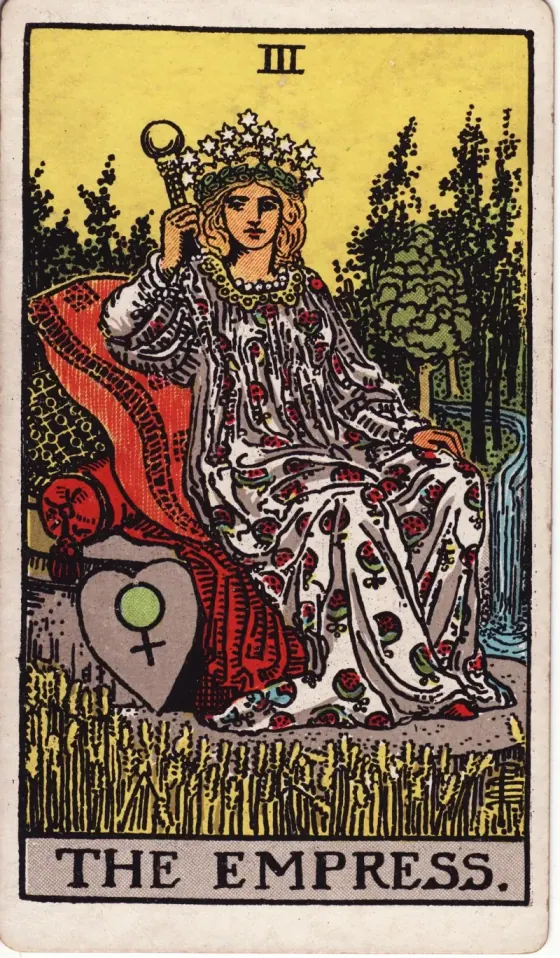
- The card stays good, and you are badly placed. The thing is beautiful, and that is exactly the problem. The Sun: a child-king adored by his people bars your way; he is genuinely loved, and there is the obstacle. The Empress: you are received with such generosity that you can no longer leave without wounding. Temperance: somebody steps in to calm you, when the anger is precisely what is keeping you standing.
- The card stays good, and it is in danger. What is worth saving is what threatens to be lost. The Star: the mentor who always believed in you has disappeared. The Empress: the house that fed you will not last the winter.
- A card already dark is read as it is. The Devil, The Tower: no need to turn it over. Turning it would soften it, and fate does not soften. Take it as it comes.
◆ Two forms — can you act?
Section titled “◆ Two forms — can you act?”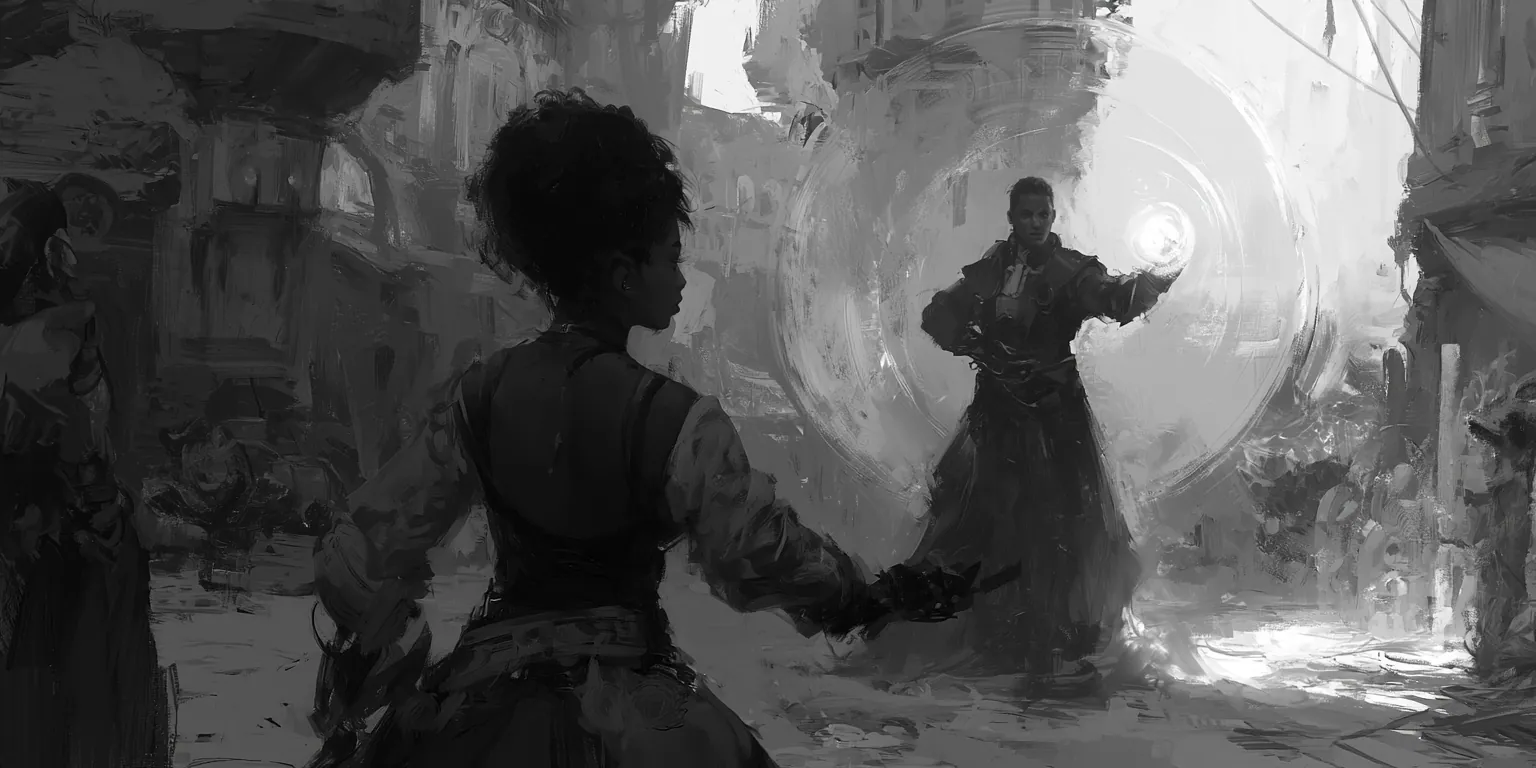
Fate has come in. Before you wager, look at what you have just written, and ask the one question that divides: can your character do something that changes the outcome?
If he can, you face it. Regiord watches the barque cast off: he can shout, run, cut through the crowd. It may not be enough, but there is something he can do, and that is all we ask.
If he cannot, you endure it. Nera is sitting across from a clan mother who has already decided, already negotiated, already arranged everything. Nothing she says will change what is about to fall.
It is not the gravity of the moment that decides this: an enormous instant may call for nothing at all, and a small one may offer a move. Your own wish does decide: of course it does, you are the one writing the scene. But it decides beforehand: nothing stops you from Raising (the)the world scene by which a stirring is raised, far from your character.part 10 a world where one can act, or a world where one no longer can. Once the scene is set down, your wish has no say. You read what you have just written, and either there is something to do or there is not. That is all the order protects: describe first what is falling on you, look for what he can do afterward. To decide after having seen the wager is to stop reading the scene at all — it is taking the handiest hand.
The card gives you the apparition; the form says what it leaves you: facing puts you on your feet, enduring leaves you seated.
◆ The Sun, played twice
Section titled “◆ The Sun, played twice”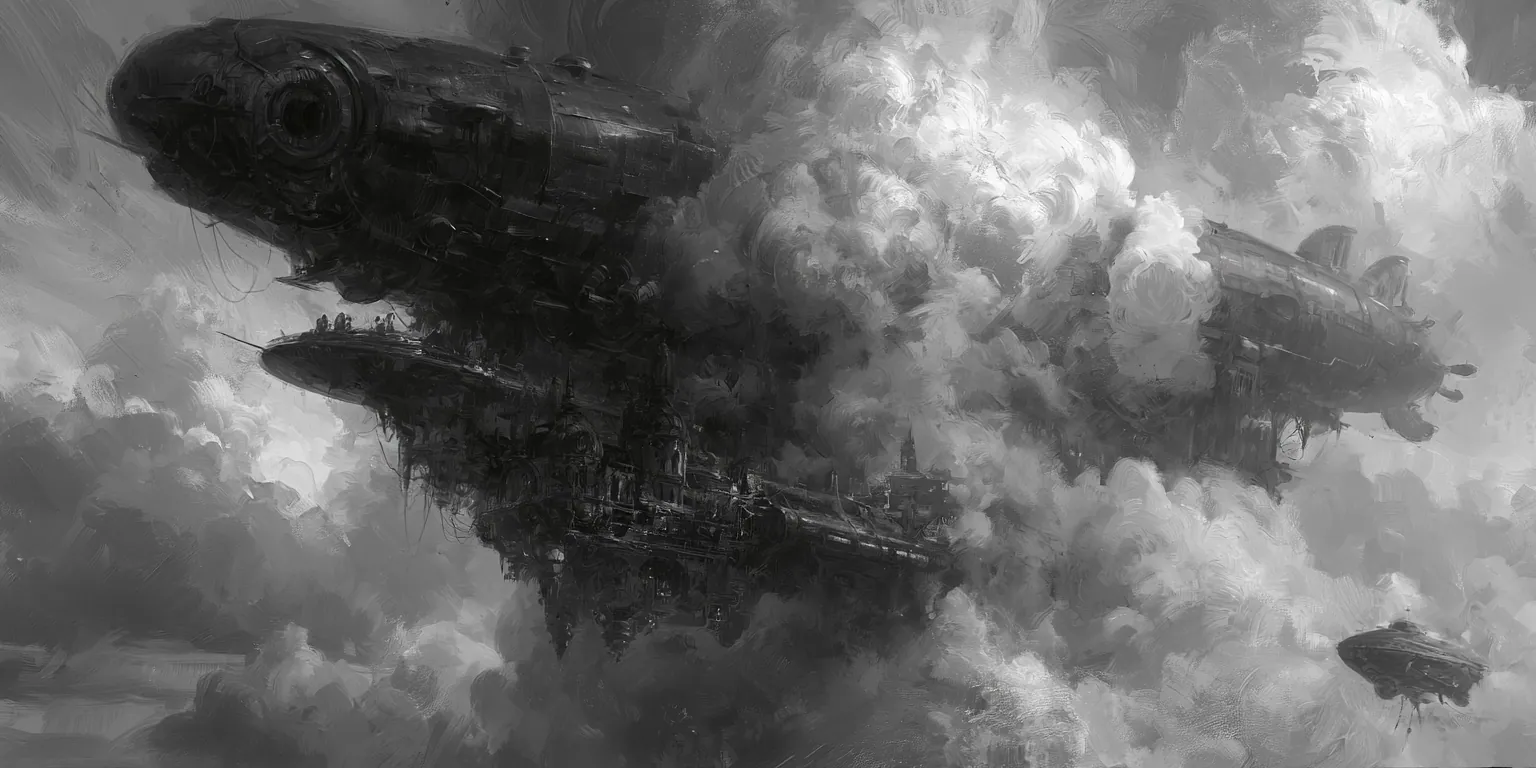
One and the same card, two forms. You watch what the scene lets you do before you know what you are risking.
Nera is in flight. At the opening, The Sun: vitality, clarity, pride. I take it, and I read it as an actor: the Dead Sun, flagship barque of the western empire, the one that hunts pirates and makes the pride of the decks.
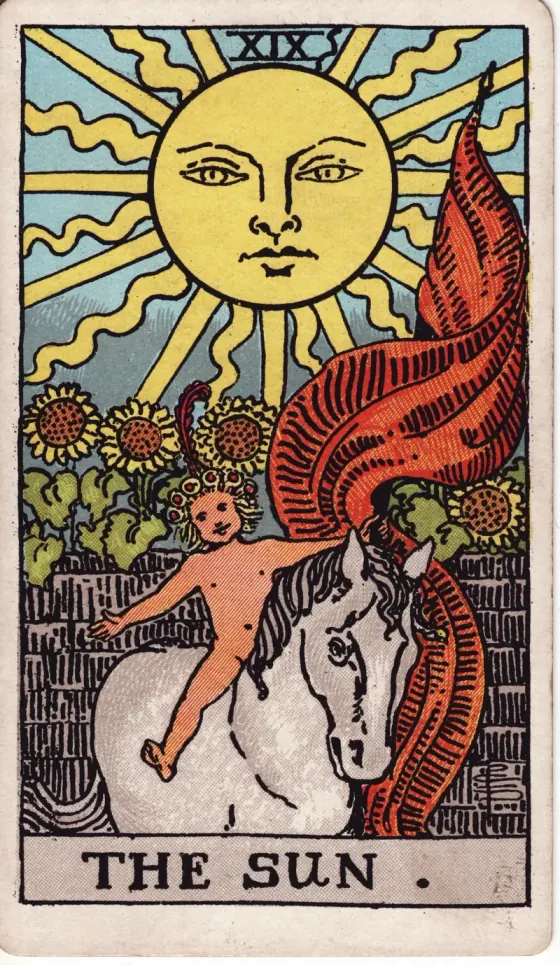
She comes out of the white, straight into my line, and she has me.
What follows I no longer choose: I read it in what I have just written.
If I can act. My hands are still on the controls.
The belly turrets swing around, without a word on the radio. I am a threat, and nothing else. I have three seconds left and a skyglider that turns better than an armored barque.
I face it: two cards, the stronger wins. I carry it.
A clean dodge, dry, of the kind one does not do twice. The route I take to flee her throws me onto a city unknown to any register, perched on a peak of floating rock.
It was there before me, and I am the first to see it. Nobody can now make it so that I did not.
If I cannot. My hands are already empty.
Fighters draw level with me and order me to put in. They bring me down. On the deck, two men are taking my skyglider apart while I am led to General Armand, who has my name in front of him and has not looked up.
I have nothing left to do: not to flee, not to plead — what was to be decided was decided while I came down the ladder. I endure. I stretch two worlds beneath The Sun, and I toss.
He closes the file. “You were in the line of an imperial barque. That is all I shall write.” My name enters the military registers, in one line that says nothing — and that does not come off.
That name will never again be neutral.
◆ The wager — what fate can take
Section titled “◆ The wager — what fate can take”Before you turn the cards or toss the Cointhe oracle of closed questions: heads the first pole, tails the second. It never resolves an action.part 1, name what is being played, in two clauses. One says what fate takes. The other says what happens if it does not take it: sometimes nothing more than getting past the cape, sometimes a door that opens and did not exist.
Name it at the last moment, never as you open the scene. You do not yet know what you are committing when you Pushan actor’s desire: what he strains toward, even when you are looking elsewhere.part 7 a door; it is the scene that teaches you. Two clauses, not one more, and nothing is at Stakean open question on which somebody else is making progress: it does not forget itself, and it does not ripen on its own.parts 8, 10 until they are said.
What you wager must be a thing. Not a mood, not an unease, not a weariness: a thing fate can take and keep closed: a bond, a place, an access, an object that counts, a desire, someone. The test asks no judgment of you: does the thing belong on one of your two pages? The one that holds what is pending, the Standing pagethe page that keeps what is pending: living actors, waits, stakes, desires under way, doors closed by fate. There is only one, and it replaces the previous one.part 8 (part 8), and the one that says who you are, the Portraitwhat you write about someone, actor or character: a name, what he wants, his suits, and what he carries when that says who he is. Without any count, and never corrected — you write a fresh one, further on.parts 7, 11 (part 11). You may not be keeping them yet; the question still stands, and it answers itself.
A ration of food is on neither, and never will be. A family pendant is on the portrait. A skyfarer’s case too. Name it concrete: the skyglider, not “my freedom”; what Sybia thinks of me, not “my reputation”: a vague wager does not come to an end, it gets negotiated. You can go as far as putting your life into it; then losing means dying — or leaving the world for good.
And if nothing comes to you to put in, do not take the major: fate is not played empty-handed.
◆ What fate takes
Section titled “◆ What fate takes”What fate closes, only fate can open.
Outside fate, Nera damages her skyglider; under fate, she loses it. Outside fate, she falls out with Sybia; under fate, the friendship comes to an end. The thing is not damaged: it closes, and fate alone holds the key.
No good idea opens it again, no scene of the everyday, no well-played action. It will take a major taken at the opening, in circumstances you do not yet have, and a wager that names it.
And fate never gives the thing back as it was — it opens the road again. Nera will not get her case back: she will become a skyfarer again, or she will not. What returns returns other.
That is what gives a major its price. A door closed by fate is a reason to take another one: note it on the standing page, one line, or nothing will say it is locked.
The other slope settles in the same way: what you tear loose under fate will not be taken back from you, but winning makes nothing whole. What you obtain commits you. The world has seen you do it, and it will hold you to be what you have become.
In both cases, leave a recoil: one sentence in which the body reacts before the thought.
◆ Facing fate
Section titled “◆ Facing fate”One single action. Two cards, you against the world, the stronger wins. Nothing to count, nothing to lay out vertically, no draw to fall back on. What the card says, it says once (cf. “An action is played once,” part 5).
The flare and the Crushingthe world wins, and it is a major: it did not go around you, it went over you. It colors the outcome, it weighs nothing more.part 5 color the outcome without weighing anything more: a flare says you carried it from where nobody was looking, a crushing that the thing went over you before you saw it coming.
Mind what the wager aims at: what is fleeting is the event, not what it leaves you. What you do does not last; its consequences do.
◆ Facing, played — the barque that does not pass again
Section titled “◆ Facing, played — the barque that does not pass again”There is something he can do, and it is not enough. You do not know a fate by what it costs — you know it by the fact that it does not pass again.
Regiord, on the upper jetty of the starport. Parno’s barque is casting off.
I open: three cards. Among them, The Chariot: the impulse, the prow already turned, the one who leaves and waits for nobody. I take it. Fate comes in.
I describe first, I wager afterward. Can I act?
The mooring lines drop one by one. Parno is on the after deck, his back turned, his collar up. Thirty paces, two hundred people between him and me, and the engine rising. He has not seen me. In ten seconds he can no longer see me.
Yes: I can shout, run, cut through the crowd. It may not be enough — it is something. I face it, and I wager in two clauses: if the world carries it, my place with Parno comes to an end, and that man will teach me nothing. If I carry it, he sees me, and he takes me aboard.
A place: it has been on the standing page for three chapters. I know exactly what I lose.
Two cards. For me the Eight of Wands: what flies, the message loosed. For the world, the Queen of Swords: the line that separates, cold, sovereign. The world carries it, by Air.
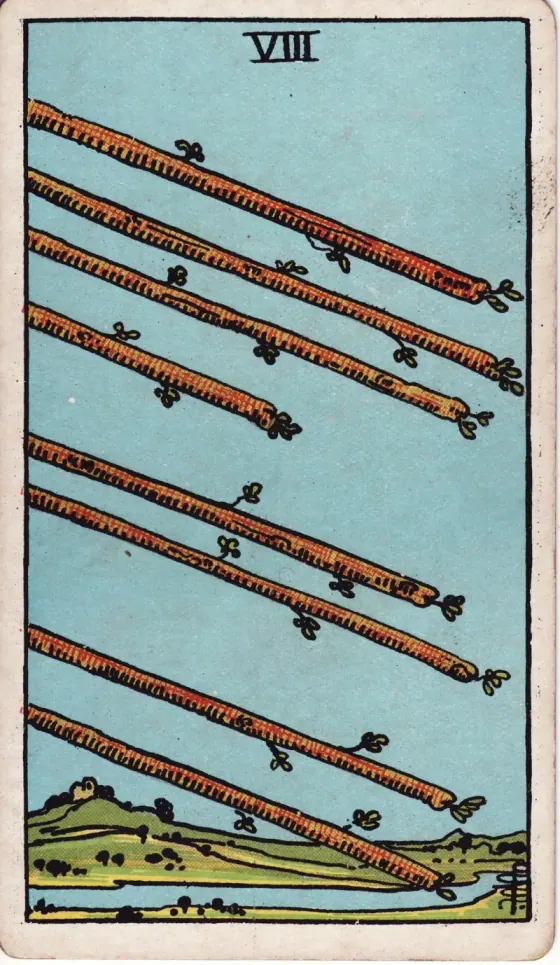 you
you
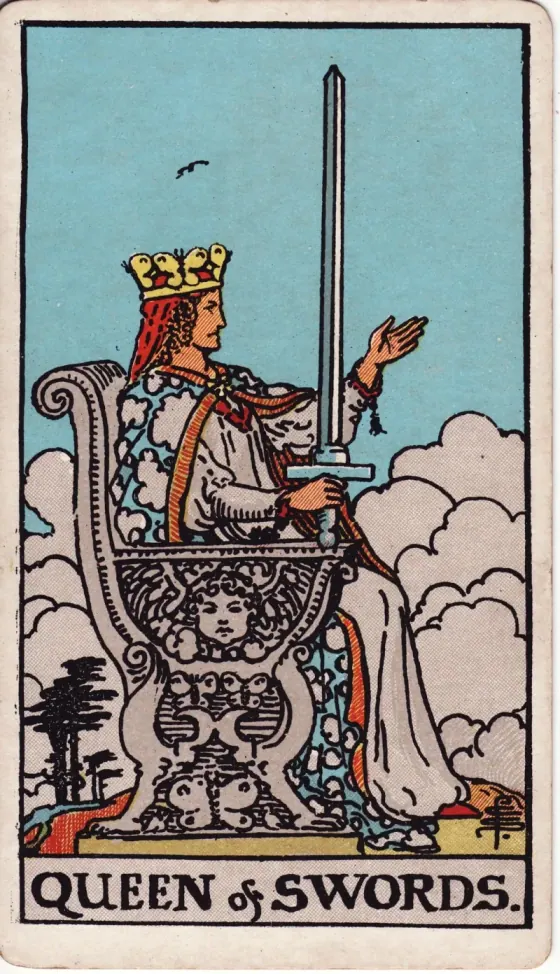 the world
I scream his name. The wind of the thrusters takes it and lays it flat; two hundred voices cover the rest. The barque pulls away from the jetty, clean, without a hesitation. Nobody, aboard, has turned around.
Nothing Regiord owns has been destroyed: he keeps his rod, his name, his grudges. What fate took is that place — and it will not give it back because I am patient or deserving. Parno did not refuse: he did not know. There will be no scene where things get explained. The somagma I may still learn; but not from him, and not like this. By what road, I have no idea.
The recoil: the throat raw from having shouted for nothing, and the hands that do not know what to hold.
On the standing page, one line, and it is worth a key: Parno’s barque — closed by fate.
◆ Enduring fate
Section titled “◆ Enduring fate”Here, your character has nothing to play. So it is the world that speaks, and you listen.
Read the major at length, before anything else. Then stretch two worlds beneath it, both to its measure. One where fate takes: that one writes itself. The other is not its handy opposite: it can take something else, take less, or open a way out you will not know how to carry. Enduring never gives a full gift.
The two worlds must be able to come out of that card and no other. If your two Poles (the two)the two worlds you set down yourself before tossing the coin: never a yes and an empty space.part 1 would hold just as well beneath any major, you have not read the card: you have tossed a coin.
And let the second give as much as the first (part 1). The test is not comfort (neither of the two worlds may be wholly comfortable), it is matter. It goes through or it breaks is not a toss: on one side everything collapses, on the other nothing happens, and there is only one scene left on the table. Ask yourself what you would have to write, tomorrow, if that one fell. If the answer is not much, it is not a world.
Then toss, and write what falls. No flare and no crushing here: they are born of a comparison, and there is nothing to compare — the coin does not overflow, it decides.
You are not being subjected to anything. You wrote the two worlds, and you chose not to decide which one arrives.
◆ Enduring, played — behind the door
Section titled “◆ Enduring, played — behind the door”Nothing to do: someone else is speaking, and the door is shut. All the matter is in the card: it gives the two worlds, and it alone.
Nera, in the corridor of the sisterhood’s house. Sybia went in an hour ago to speak in her name. The door has not come back out.
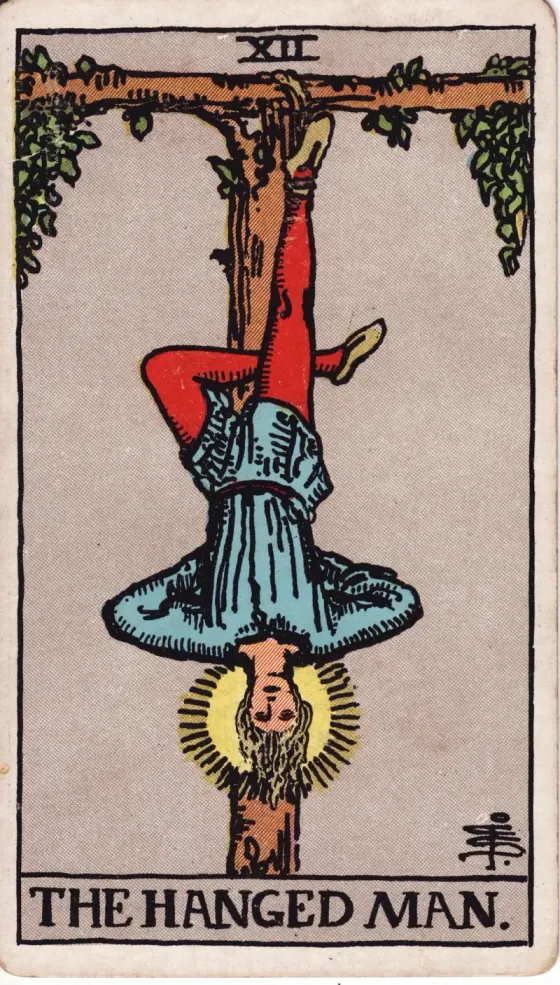
I open: three cards. Among them, The Hanged Man: suspension, the one who has been turned over and does not come down, the one who sees from another angle because he has stopped deciding. I take it.
Can I act? I look honestly. Going in is losing in advance; knocking is going in. I was told to wait in the corridor, and everything that counts is being said behind three fingers of wood. No: there is nothing. I endure.
I read the card again before doing anything at all. The Hanged Man does not say failure: it says what stays in the air, and what one gains by staying there. My two worlds have to come out of that.
I wager, in two clauses: what fate takes is the verdict itself: they will not decide, not tonight and not ever, and I shall stay struck off without any session having said so. What it leaves if it does not take it: they do not decide either, but from where I am, head down, I shall finally see who put the file together — and I shall not be able to un-know it.
Neither of the two suits me: one takes my verdict, the other would take someone. I toss. Tails.
The door opens onto backs, not faces. Sybia comes out last, and she does not look at me straight away. “They would not vote. The file stays open.” A clerk goes by behind her with the register under her arm, and I see the page: my name, and nothing across from it. No condemnation. No date. Nothing.
What I have lost is not the sisterhood — it is the possibility of ever being cleanly let out of it. There will be no session to wait for. My striking-off will not be lifted because I have been patient or beyond reproach: that door is locked, and it will take another major, another evening, for it to open otherwise.
The recoil: fingers looking for the strap of a case I no longer have.
On the standing page: the sisterhood’s verdict — closed by fate. And one line more, that I cannot explain to myself yet: Sybia did not look at me on her way out.
◆ Play your first fate
Section titled “◆ Play your first fate”The evening a major tempts you at the opening, and you take it, you are there. Describe first what falls on you. Then ask whether he can act: if your character can do something that changes the outcome, name your wager in two clauses and face it: two cards, once. If he cannot, read the major at length, stretch two worlds beneath it that it alone could give, and endure: the coin will say which one arrives. In both cases, a recoil, and one line on the standing page for what fate has closed. It is here, and nowhere else, that your character risks becoming other.