The tarot
asking, and reading what falls
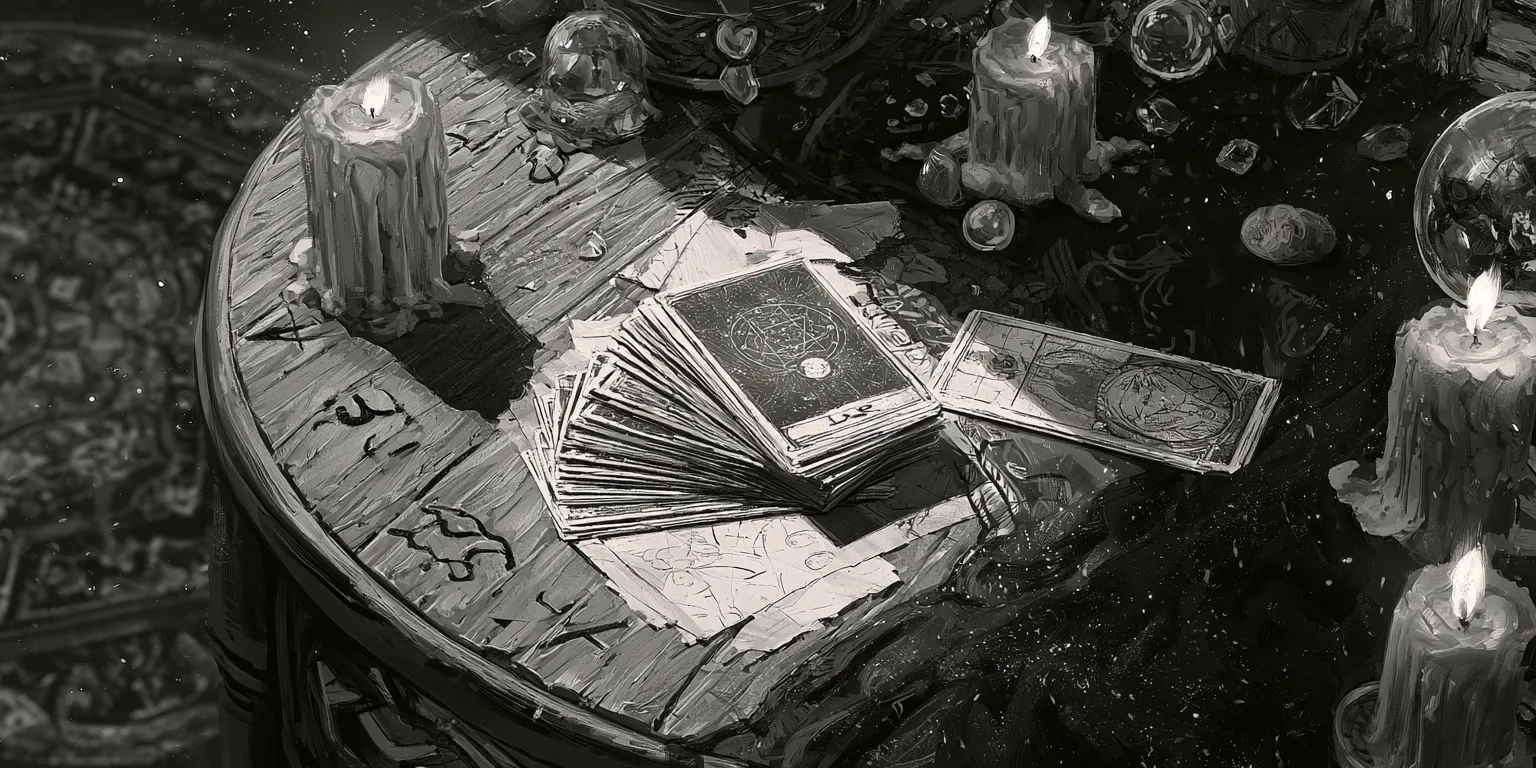
I lay three cards on the upturned crate that serves me as a table. Three possible roads, and I will take only one. I look at them a long while, the way you look at three strangers on a quay before choosing which one to speak to — then I let the other two go without me.
The Cointhe oracle of closed questions: heads the first pole, tails the second. It never resolves an action.part 1 is the oracle of closed questions; the tarot is the oracle of open ones, those whose possible answers you do not know in advance.
◆ Which tarot?
Section titled “◆ Which tarot?”For this you use a tarot deck, all 78 cards shuffled together, Major and Minor Arcana as one.
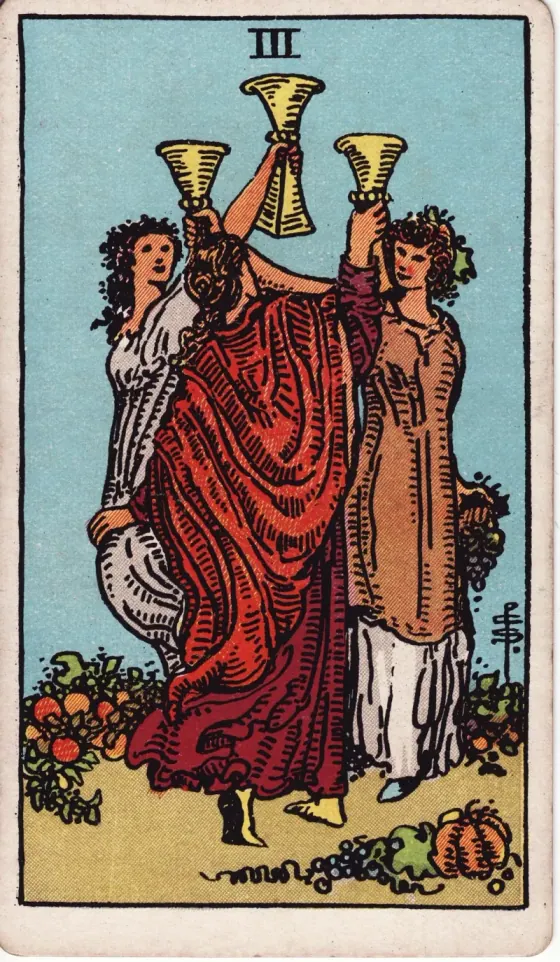
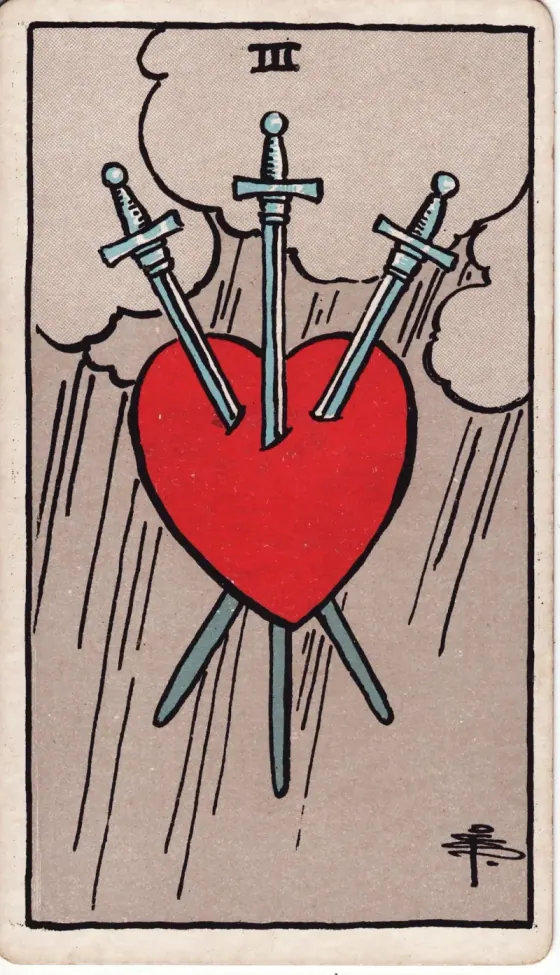
Which one? Any will do, but an illustrated deck — one where every minor stages a Scenethe unit of play: you open it, you play it, you close it.part 3, Rider-Waite-Smith fashion — makes free reading easier: the picture whispers Leada scene declared to make a wait or a stake move: no new gesture, only the intention changes.part 8 to you.
 a toast
 the pierced heart
 the giving hand
No deck? A drawing app will serve, provided it shuffles all 78 properly. What each card sets off, part 4 will tell you.
Never handled a tarot? No cause for worry: no prior knowledge is needed to play. If you would like a footing all the same (what the Suits (the four)Wands/Fire, what cannot wait · Cups/Water, what comes back · Swords/Air, the line that separates · Pentacles/Earth, what remains. They say a card’s matter, and how you acted.part 4 are, the numbers, the majors, how to hold a card), the appendix “The tarot, in brief” gives it to you in two pages.
◆ The gesture before anything else
Section titled “◆ The gesture before anything else”Before the rules, there is the pleasure of the touch. Feel the deck in your hands; shuffle it, cut it without hurrying. And when a card falls, do not pounce on what it means: set it down before you, and take the time to look at it. These are not rules; nothing obliges you. It is the slowness that makes you forget yourself: the tarot is not consulted, it is let fall, and listened to.
◆ Reading a card
Section titled “◆ Reading a card”A tarot card is read freely: it has no fixed meaning, it has the meaning the moment calls for. Tradition lends one to each of them all the same, and nothing forbids you to lean on that: your deck’s booklet, an app, or this book’s appendices, “The tarot, in brief” for the footing and “The 78, card by card” for what each card shows. Take it as a starting point, never as an answer: it is the moment that decides, not the catalogue.
If you are stuck, take the most literal reading and move on. And if nothing comes, do not search inside the card, search in your world and in what your character Desirewhat your character wants. No mechanism, no count: it orients what you play.part 11: the matter is almost always there. (What each suit carries, in detail: part 4.)
◆ Major Arcana, Minor Arcana
Section titled “◆ Major Arcana, Minor Arcana”The 78 cards fall into two families. The Minor Arcana, the four suits from Ace to King, speak the Everyday (the)what plays out when you have kept a minor at the opening: fate has not come in, nothing is put at stake.part 4: what you come across, what you do, what happens. The Major Arcana (the twenty-two named ones, The Moon, The Tower, The World) speak Fatewhat comes in when you keep a major at the opening, and by no other door: the moment stops being ordinary. What it closes, only it can open.part 6. Ask the Sky keeps that division as it is: a minor is read level with the world, a major never falls for nothing. (This book will most often say major and minor, and nothing more: it is the short word of someone with the deck in hand.) (What each of them weighs: part 4.)
 the everyday
◆ World or character?
Section titled “◆ World or character?”When you question, with the coin or by drawing a card for an answer, ask yourself first who you are questioning: the world, or your character? Some things depend only on the outside. Is there a guard at that door? The world answers, you draw. Others depend only on you. Do I notice it? do I dare? That is for your character to play, not for chance to settle.
The trap is handing the coin or a card a question that was yours. “Am I being followed?” belongs to the world: ask. “Do I realize it?” belongs to you: decide, and own it. Confusing the two means letting chance play in your place the very thing you came to play.
The trap is not doing it once. There is no draw police: on the evening you do not feel like settling it, hand it over, and play from the answer: deciding not to decide is still a decision. What empties a game is making a habit of it and no longer wanting anything yourself. Where exactly to measure it: part 12.
◆ What to ask a card
Section titled “◆ What to ask a card”The coin decides between two worlds you set out yourself (part 1); a card, for its part, brings matter you had not foreseen. The test therefore changes with the instrument, and it hangs on a single property: a card cannot say no. Never ask it whether there is something — ask what.
That leaves two families of questions, where the coin served two others. One adds to the world without undoing anything; the other can cost you.
◆ Widen — what exists just beyond the frame
Section titled “◆ Widen — what exists just beyond the frame”What great building dominates the view from here? What can be heard from the room? What can be seen through the window? You draw a card, and you question it: it gives you matter, and you make of it a monument, a rumor, a smoke on the horizon. This is the family that gives a place an outside, and it undoes nothing, so ask without counting.
through the window
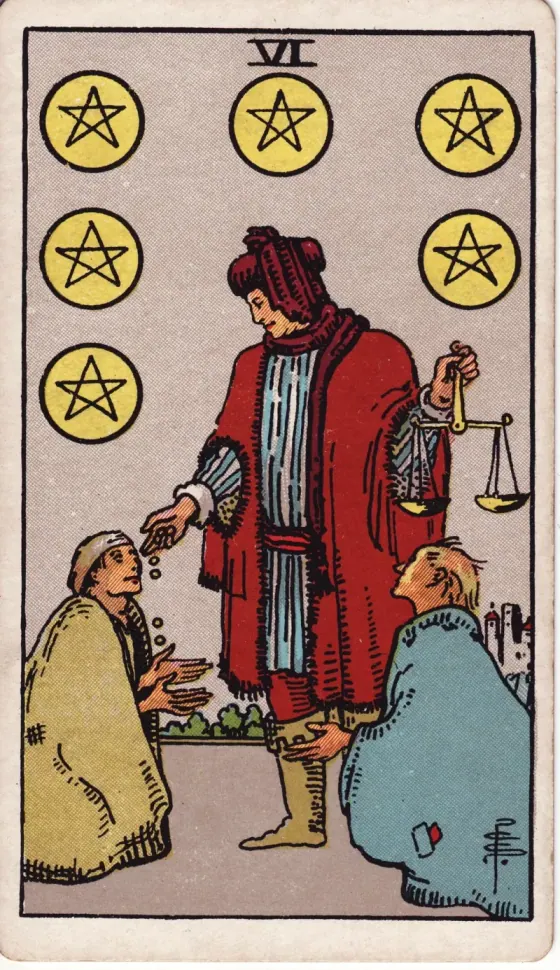
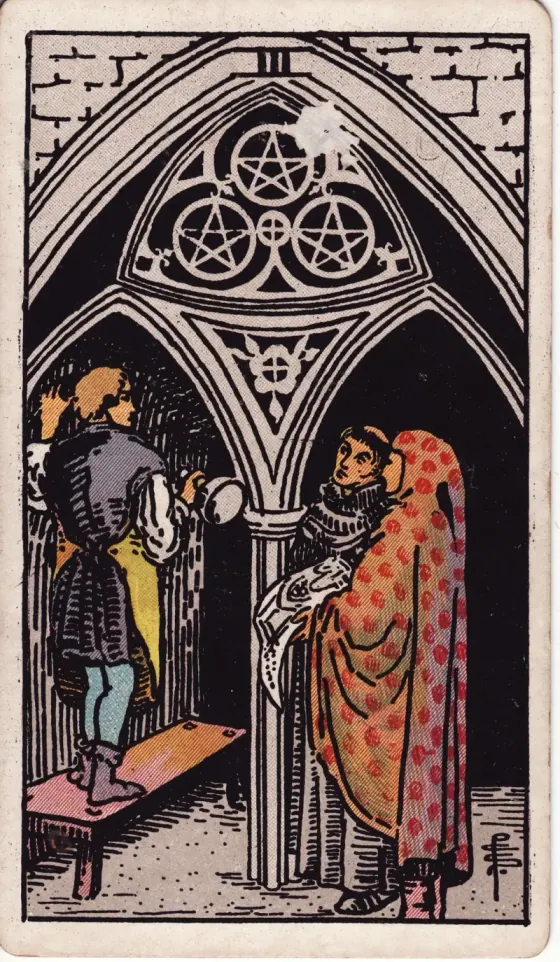
What can be seen through the window? Six of Pentacles: the giving hand, and the one held out. I make of it a line along the wall, up to a low door: something is being handed out, and there will not be enough for everyone. The line is mine, entirely; what is not mine is having had to put charity into a district where I meant to set down a market.
And the weather, always. It is the most profitable question in the game, and it can never answer “nothing.” Driving rain, hard sun, low mist, a rising wind: the answer changes at a stroke the light, the noise, who is outside and what can be done there. Make a habit of it. You can always ask about the weather, and it is never wasted.
◆ Hook — what is off, what calls
Section titled “◆ Hook — what is off, what calls”This one can bring your plan down, and that is why it costs: weigh it before you draw. There is always something. So never ask whether there is something, ask what. “Is something off?” opens a door that, one time in two, gives onto nothing — and onto a flat scene. “What is off, here?” never closes: turn your head, linger on a detail, and draw a card. The same goes when you are looking for a Threadthe tension running from one scene to the next: what stays open when a scene closes, and calls up the following one.part 8, a clue, the trace of a Stakean open question on which somebody else is making progress: it does not forget itself, and it does not ripen on its own.parts 8, 10: ask where it is hiding, never whether it exists. This is not indulgence: what you find can cost, mislead, be only a beginning. The world does not refuse you matter; it makes you pay for it.
 what is off
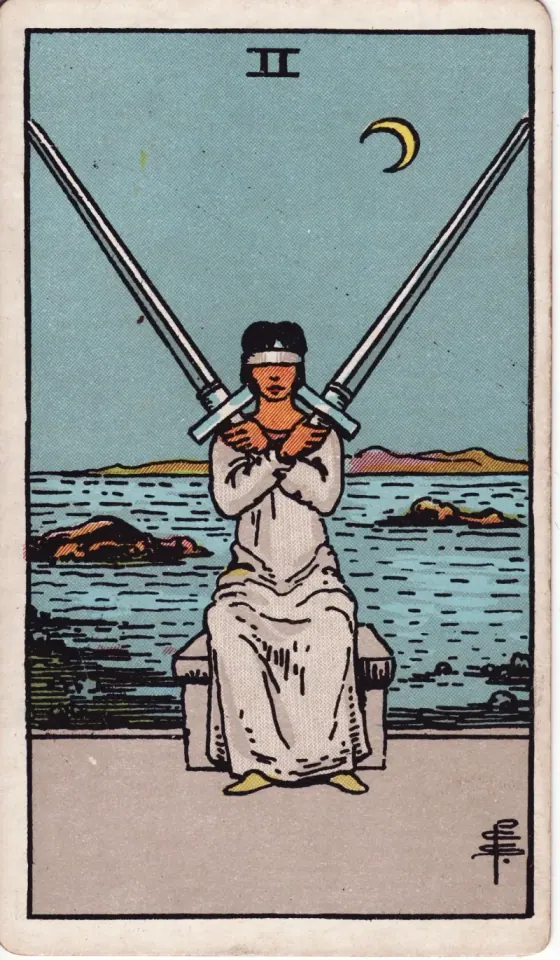
What is off, here? Two of Swords: the blindfolded eyes, what is held at a distance. I choose: nobody in the room looks toward the door at the back. Not once, not by accident. Nothing obliged me to that particular door — the card only asked that something, here, refuse to be seen.
◆ Probe — staying with the answer that fell
Section titled “◆ Probe — staying with the answer that fell”Four families, counting the coin’s: Populate · widen · hook · probethe four families of question: who is there and how he is (coin) · what exists just beyond the frame (card) · what is off (card) · staying with the answer that has already fallen. (parts 1 and 2), widen, hook — and probe. This last one calls up no new matter, and it is often worth more than the other three.
To probe is to stay with the answer that has already fallen. Why so easily? What will it cost? What is he not saying? What does that teach me about him? Most often, without drawing anything at all: you ask for nothing new, you exhaust what has just happened.
When you want a footing, the coin almost always suffices. Does he know? Is he lying? Is this the first time? Two ends, one answer, and you have not left the matter you were probing.
You can also draw to shore it up, but then you narrow. That is where people go wrong: a card drawn on a broad question does not probe, it replaces. It brings new matter that covers over the matter you meant to deepen, and off you go elsewhere, with a fine image and an abandoned thread. For a card to probe, the question must nail it to what is already there.
 the face
 why
why
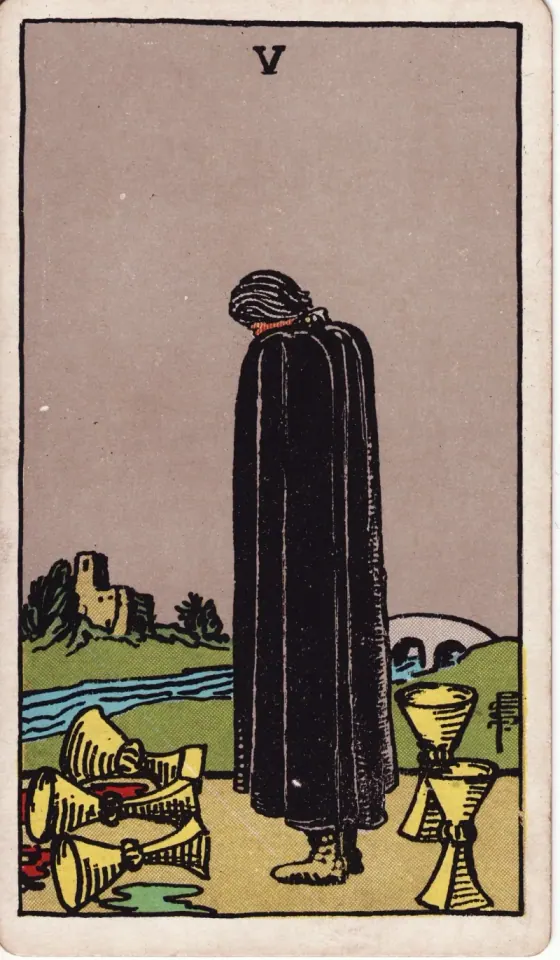
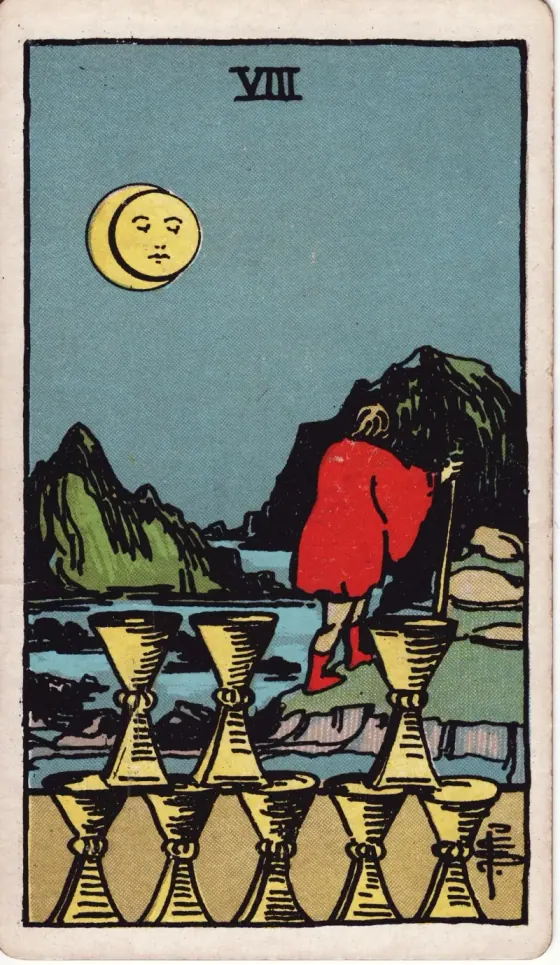
The Five of Cups gave me a sad face: a woman at the counter, and behind her something overturned. I could stop there. I would rather narrow: why is she sad? And I Draw for / draw againsta card read on the side you already know to be true. It no longer says whether, it says what — and the side must be true before the draw.part 4 that question alone. Eight of Cups: going away, leaving behind what one can no longer look at. She has left home, and not yesterday. The second card opened no new scene: it stayed stuck to the first, and served only to detail it.
This is the family people forget, and it is almost always the one that is missing. The beginner’s reflex is to pile up: an answer, a sentence, another question. A scene made of ten answers barely touched is flat; a scene made of three answers probed to the bottom is full. Before reaching for the deck, ask yourself whether the last card has really given everything.
◆ Lay down three cards
Section titled “◆ Lay down three cards”Take your deck, shuffle it, cut it. Draw a card, set it down before you, and say aloud what it gives you: a mood, a face, an object, the weather. One sentence is enough. Then a second, then a third.
Do not try to link them: they are not telling anything yet, and that is not their job. And do not take back the one that gives nothing: look at it longer. That is all the tarot asks, and it is what is learned the most slowly — staying in front of the image a little beyond your appetite for it.